
OneCasino live tables and game shows
 Available in GB
The OneCasino Irish live section combines streamed roulette, blackjack, baccarat, poker and studio game shows. Examples include Lightning Roulette, Crazy Time, Mega Ball and Monopoly Big Baller, with live production from Evolution and Pragmatic Play. Different game families have different bet decisions, feature rules and financial exposure even though all are presented through a live video experience.
The sharpest distinction is between a category name and an individual table. OneCasino displays specific roulette stake ranges and varied blackjack starting amounts. These examples explain particular tables; they do not represent the platform-wide minimum, maximum or return for live play.
Studying the table-level mechanics makes the live catalogue easier to interpret. Roulette feature multipliers, blackjack decision rules, baccarat payout choices and game-show bonus events should be considered alongside the pace of each round. A stream changes presentation and timing, while a stake remains at risk on a chance outcome.
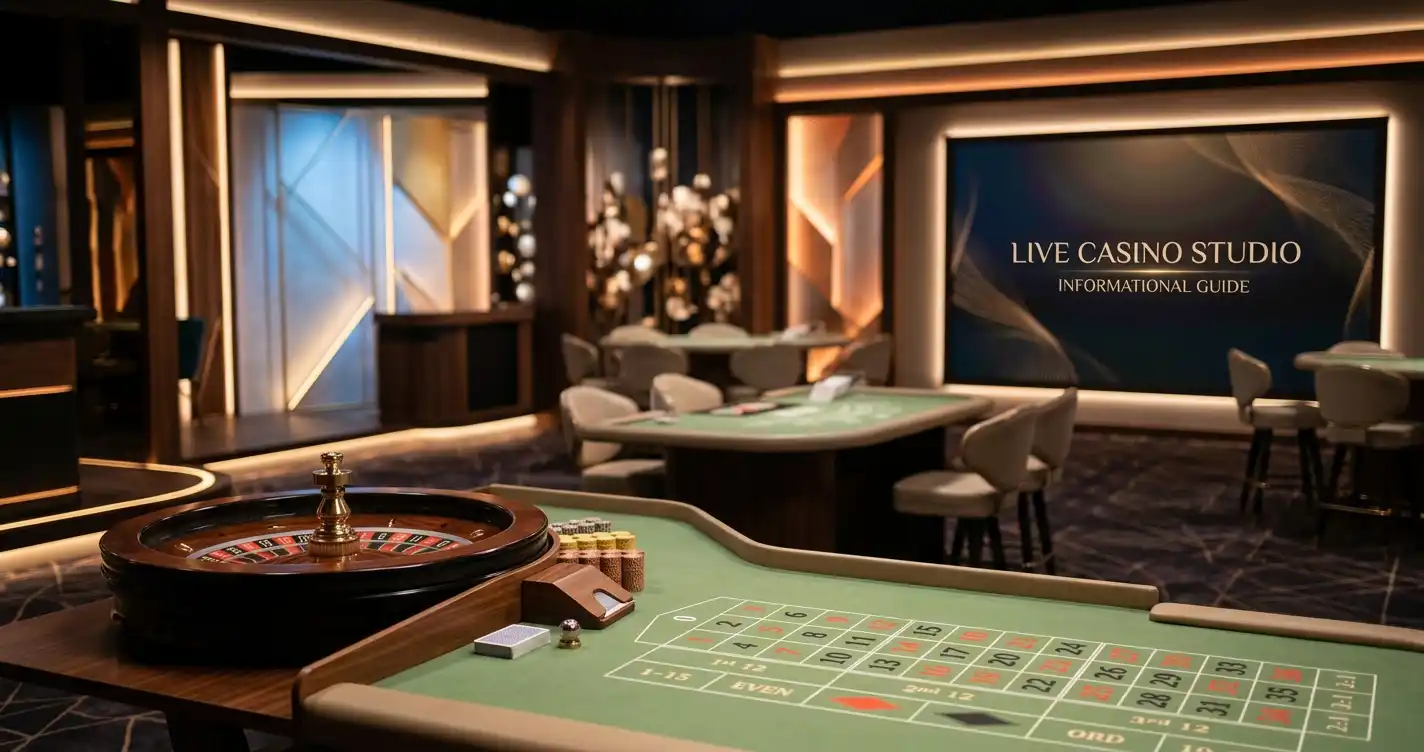
The stake belongs to a table, not a category
OneCasino’s live catalogue includes tables with materially different permitted stakes. The Irish live listing shows Lightning Roulette at €0.20–€5,000 and Red Door Roulette at €0.50–€20,000. Selected blackjack tables begin at €1 or €5 and others start higher. These are individual examples, not a minimum or maximum for all roulette, all blackjack or the entire live section.
A visible stake range is often one of the first differences between two tables using the same basic game. It may refer to the table’s accepted base wagers rather than the total exposure from every bet option or feature selected in a round. Where a live variant has side bets, added features or an unusual settlement rule, the base limit alone does not describe the full cost of a round. A player needs the particular table’s rules to interpret the stake.
| Named table | Displayed stake range | What the range covers |
|---|---|---|
| Lightning Roulette | €0.20–€5,000 | This listed roulette table |
| Red Door Roulette | €0.50–€20,000 | This listed roulette table |
| Selected blackjack tables | From €1, €5 or more | Examples differing by table |
The range affects the smallest available wager, but it does not tell the whole story about spending pace. Roulette tables resolve bets around a wheel event; blackjack may involve successive decisions within a hand. A sequence of rounds, optional features and repeated stakes can therefore create different total turnover even when the first stake happens to be identical. Stake ceilings are account and table controls, not estimates of what somebody is likely to win.
When comparing two live listings, look at the specific version, permitted bet types, side-bet eligibility, round pace and displayed minimum. In particular, Lightning Roulette and Red Door Roulette should not be treated as identical solely because both use a roulette wheel. Their presentation and feature rules make their table-level information relevant to the experience.
Betting ranges also change how a personal limit functions. A budget or maximum stake selected independently of the game’s design does not change the house edge or remove variance, yet it can limit total exposure. The mathematical risk comes from the game and bet selection; the published table range says only what that particular product permits.
Roulette and blackjack ask for different decisions
Live roulette centres on placing bets on the outcome of a wheel spin, often with combinations of inside and outside wagers. A named version such as Lightning Roulette may include extra presentation or multiplier mechanics, while Red Door Roulette has its own feature set and table limits. The relevant information is the specific wheel layout, qualifying bet types and payout schedule, including how any advertised multiplier applies.
Multipliers can make a result more visually dramatic, but the presence of a multiplier alone does not indicate an improved overall return. A bonus payout often comes with its own probability and other rule differences. Examining only the largest possible payout misses the more important question of how frequently the relevant outcome can happen and which bets qualify. Previous spins displayed beside a wheel are historical outcomes, not an instruction about the next result.
Live blackjack involves decisions within a hand. Rules about dealer drawing, blackjack payout, doubling, splitting, surrender where offered and side bets affect the structure of the game. OneCasino displays several table-stake starting points, so choosing the word ‘blackjack’ from the catalogue does not identify a single betting rule or starting amount. A higher minimum is a financial constraint, not evidence of a better return.
- Roulette: wheel type, permitted bets, wheel-specific features and individual table limits.
- Blackjack: rule variant, dealer behaviour, player actions and any optional side bets.
- Both formats: game pace, separate supplementary stakes and how quickly money can be wagered repeatedly.
The role of the stream is to show a dealer or studio event taking place while players place eligible bets under a common timetable. Interactive graphics and countdowns add an interface layer; the probabilities still follow the game rules. A visually polished table is not evidence that losses can be controlled by watching previous results, timing entries or copying other players’ bets.
Compared with slots in the broader OneCasino games catalogue, a live table may give a player more time to consider each round and more visible rules around bet placement. That difference in pacing is meaningful for session planning, but a slower rhythm does not itself establish a lower edge or a positive expected outcome. Game-specific rules remain more useful than assuming an entire catalogue category behaves alike.
Card tables need rule-level comparisons
Alongside roulette and blackjack, the Irish live listing includes baccarat and poker-labelled tables. They belong to the same broad streamed-casino section, but the wagers and decisions they present are not the same. Baccarat typically focuses on the outcome of hands such as Player, Banker or Tie, each with its own payout treatment. Particular versions can also feature side bets. The relevant information is the precise payout and commission structure used at the table.
Live poker-labelled games require another distinction. A casino table built around poker cards can be a house-banked game with fixed wager and payout rules. That is different from a traditional player-versus-player tournament with a prize pool and entrants competing against each other. A recognisable deck, dealer and poker vocabulary do not tell a reader which economic structure the game follows; the chosen table’s rules do.
For either category, side bets can change total stake exposure. A headline minimum may refer to the main betting position, with optional additional positions requiring separate wagers. Some variants also use multiple rounds of card dealing, decisions or feature resolution. It is therefore useful to interpret the amount staked across a complete hand, not just the first amount placed before the cards appear.
- Identify the table variant and the person or entity against whom the wager is settled.
- Read the main-bet payout structure, including any relevant commission or draw treatment.
- Separate optional side bets from the minimum needed for the base game.
- Consider the time between decisions and the full amount exposed during a complete hand.
Terms such as ‘live’, ‘poker’ and ‘VIP’ describe presentation or catalogue positioning, not a universal rate of return. Two card tables with different payout conditions should be assessed separately even when they have the same stream provider or similar visuals. The existence of multiple categories makes rules comparison more important, not less.
Casino play also has a cumulative dimension. At a card table, a run of hands can make a modest initial balance pass through much larger turnover. This matters because a win at an early stage does not neutralise the financial risk of subsequent hands. The outcome of the next hand depends on the defined random process and the table rules rather than the narrative produced by a sequence of earlier wins and losses.
Studio game shows add event and multiplier rules
OneCasino lists studio-style games including Crazy Time, Mega Ball and Monopoly Big Baller, as well as roulette variants. Evolution and Pragmatic Play appear among the live game providers on the Irish offering. A studio broadcast can combine a presenter, a wheel or number-drawing mechanic, rounds with bonus events and on-screen multipliers. Those components create a different rhythm from standard card and wheel tables.
Crazy Time is a game-show example built around a central event and bonus-style elements. Mega Ball and Monopoly Big Baller illustrate lottery or bingo-influenced show formats rather than conventional blackjack decision trees. These names identify entries in the catalogue, but they do not make their chance structures identical. Each has its own qualifying bets, bonus-event conditions, pacing and payout rules, which must be considered individually.
Multipliers are often the most prominent graphic in this category. They should be interpreted with the probability of triggering and the eligibility of the stake that receives them. A large featured value on screen is a possible event description, not a reliable estimate of what a typical session returns. Bonus-show rounds may involve several stages or a wait before a particular event resolves, changing both time exposure and the temptation to continue after a loss.
Stream providers supply the live production and games technology; they are not a blanket guarantee of identical house rules. Evolution and Pragmatic Play can each appear through more than one format or individual title. The provider name helps identify the production source and often the game family, while the actual rule sheet tells the reader how the stake is settled.
Bonus terms add another layer of difference. The Irish OneCasino promotional rules credit 20% of live-dealer wagering towards relevant bonus playthrough, whereas eligible video and classic slots contribute 100% and ordinary table or other categories can contribute 0% under the same bonus policy. A live game shown in the catalogue should not automatically be assumed to qualify as a 20% contributor; the applicable bonus’s game categorisation matters. The bonus contribution and restriction guide explains the counting rules, including why a played euro and a qualifying euro can differ.
- Event structure: the feature or number outcome that determines settlement.
- Eligible wagers: which bets receive ordinary or bonus payouts.
- Round rhythm: how often new betting opportunities arise and how long a feature runs.
- Promotional accounting: whether the selected title and stake are credited under an applicable offer.
For money and time management, the distinction is practical. A game-show event can make waiting for a feature feel like progress, although the result remains uncertain. Spending limits, breaks and session duration retain their value precisely because elaborate presentation and variable payouts can obscure how many wagers have already been made.
Frequently asked questions
What live categories are listed?
OneCasino’s Irish live section includes roulette, blackjack, baccarat, poker-labelled games and studio game shows.
Do all roulette tables share limits?
No. For example, Lightning Roulette is listed at €0.20–€5,000, while Red Door Roulette is listed at €0.50–€20,000; those ranges belong to the individual tables.
Which studios supply streamed tables?
Evolution and Pragmatic Play are among the named live-game providers in OneCasino’s Irish catalogue.
Why the individual table matters more than the category label
OneCasino’s live offering spans ordinary casino table formats and studio shows, with named examples across roulette, blackjack, baccarat, poker and hosted bonus events. Its variety is most useful as a way to locate the actual game rules. The displayed stake range for Lightning Roulette, for example, has no authority over another roulette table, just as a game-show multiplier describes a particular event rather than a standard live-casino return.
To understand financial exposure, connect the exact wager rules, optional features and table pace rather than relying on a provider’s reputation or the production style of a stream. Session history cannot forecast independent outcomes. Reading the variant’s permitted stakes and payout rules gives a more precise description of risk than treating everything with a live presenter as one kind of game.
Read next
Prepared by the Onecasino-ie.net editorial staff.